Weight Loss Is More Than Will

Why Weight Loss Takes More Than Willpower
By Dr. Desiree Eakin
You’ve changed how you eat. You’ve tried to move more. Yet the weight barely changes—or returns after you lose it. It’s easy to wonder whether you simply need more discipline.
Your effort matters. So does your biology.
Weight is influenced by more than daily choices. Genetics, sleep, stress, medications, medical conditions, and your environment can affect appetite, energy use, and fat storage. Two people following similar routines may experience very different results.
Your brain also receives hormonal messages that help determine when you feel hungry, when you feel satisfied, and how your body responds to losing weight. These signals operate throughout the day, often without your conscious awareness.
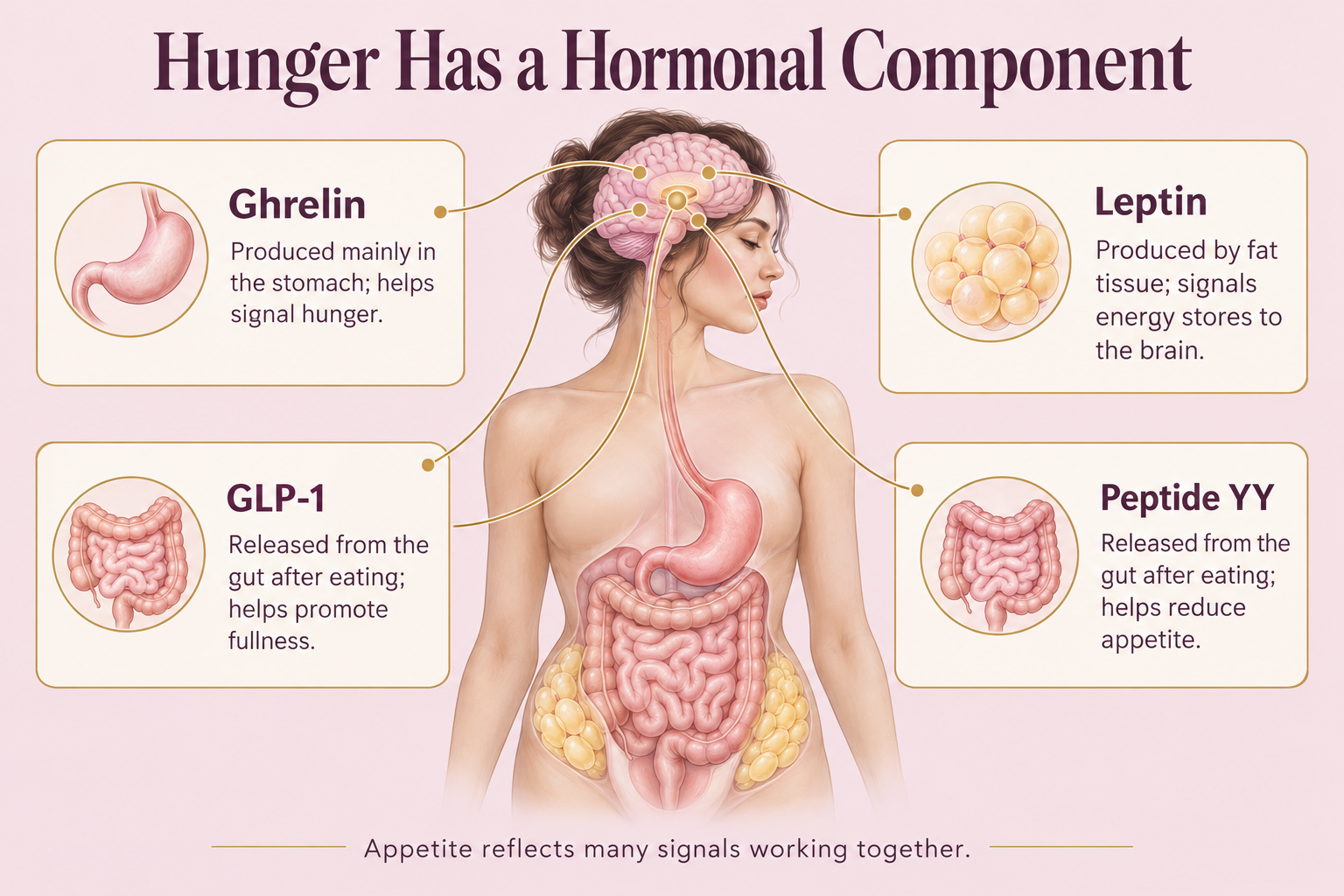
Hunger has a hormonal component.
Ghrelin, produced primarily in the stomach, helps stimulate hunger. Leptin, produced by fat tissue, communicates information about the body’s energy stores to the brain. As weight decreases, leptin levels typically fall, while ghrelin may increase—changes that can make you feel hungrier even as you’re making progress.
Other hormones, including GLP-1 and peptide YY, help communicate fullness after eating. Appetite depends on how these signals interact with the brain, rather than on a single hormone working alone.
Why keeping weight off can feel harder than losing it
After weight loss, the body can respond with stronger hunger signals and lower energy expenditure. Some appetite-related hormonal changes can persist long after the initial weight loss. In one study, changes in several hormones and increased hunger were still present a year later. This helps explain why maintenance may require ongoing support.
Sleep and stress add another layer. Inadequate sleep can increase hunger and make food choices harder, while ongoing stress can affect eating patterns. These challenges deserve attention as part of a treatment plan.
Healthy habits remain essential. But for some patients, nutrition and physical activity alone do not sufficiently address the biological pressures that make weight management difficult. Appropriately prescribed medication may help regulate appetite and support long-term progress alongside those habits.
A plan that looks deeper
At Total Illusion, I use The Look Deeper Method™ to understand your health history, eating patterns, sleep, symptoms, and goals. Together, we build a personalized plan that may include nutrition guidance, strength training, medication when appropriate, and ongoing follow-up.
Our focus extends beyond pounds lost to supporting muscle, health, and a sustainable maintenance strategy.
Needing support is not failure. You deserve care that recognizes your effort and understands your biology.
Schedule a Metabolic Health Consultation to explore a plan tailored to you.